

Bringing a hot tub home is one of those upgrades that instantly changes how you use your space. Evenings feel more relaxing, weekends feel more “mini break”, and suddenly the garden becomes somewhere you want to be, not just somewhere you mow.
But before the bubbles start, there’s one unglamorous bit that makes all the difference: preparing the space properly, especially the base.
A hot tub is heavy, it needs to sit level, and it needs a stable foundation that won’t shift over time. The good news? You don’t need to be a builder, and you don’t need to drown in technical jargon. This guide walks you through what to consider in a simple, practical way, with a big focus on the base (because that’s where most issues start).
Why the Base Matters More Than People Think
Your hot tub base has three jobs:
- Support the weight safely
- Keep the hot tub perfectly level
- Stop movement, sinking, twisting or long-term stress on the cabinet and shell.
When a base isn’t adequate, problems can show up slowly:
-
Doors and panels not lining up properly
-
Water level looking “off”
-
Covers not fitting quite right
-
Extra vibration or noise
-
Long-term strain on the frame and components
Even if everything seems fine at first, a base that settles unevenly over time can cause the hot tub to sit out of level — and that’s where avoidable wear and tear creeps in.
Think of it like a mattress. The hot tub might be the best one you’ve ever bought, but if the bed frame is warped, you’re not going to enjoy it for long.
Step One: Choose the Right Spot
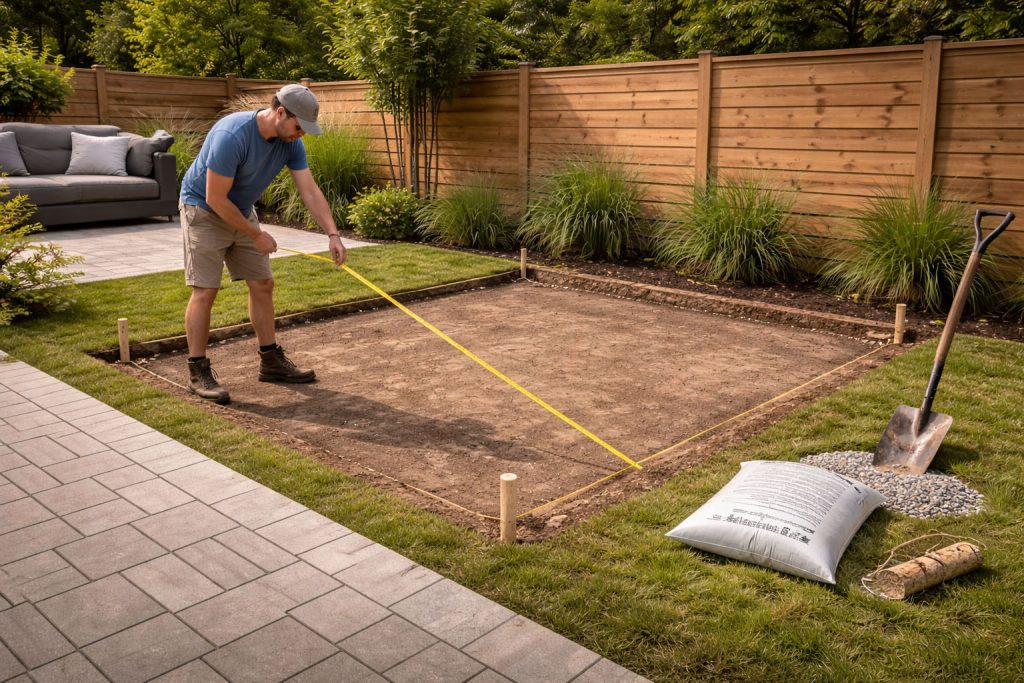
Before you think about what the base is made of, make sure the location makes sense.
Practical things people forget (until it’s too late)
-
Access for delivery: Can the hot tub physically get into the garden? Gates, side passages, steps, tight corners and gravel paths matter.
-
Access for servicing: Hot tubs need occasional access to the panels. You don’t want it wedged so tight that maintenance becomes a nightmare.
-
Privacy and comfort: You’ll use it more if you feel relaxed. Consider fencing, screening, pergolas, or a quieter corner.
-
Wind exposure: Wind steals heat and can make getting in/out feel less pleasant. A sheltered spot helps.
-
Distance to the house: Close enough that you’ll actually use it on cold nights, but not so close that splashes become a nuisance.
The Big One: Understanding Weight (In Plain English)
A hot tub is heavy. Not just the tub — the water and people add a lot.
-
Water is heavy, and a typical hot tub holds hundreds (sometimes over a thousand) litres.
-
Add a few adults, and the total load increases again.
That weight sits on the footprint of the hot tub. If the base isn’t built for it, the tub can sink, tilt, or stress the frame.
You don’t need to calculate anything yourself — but you do need to treat the base like it’s supporting something substantial (because it is).
What Makes a Good Hot Tub Base?
A good base is:
-
Flat and level (this is critical)
-
Strong and stable
-
Made from a suitable material
-
Built to the correct size (the whole tub must be supported)
It’s not enough for the base to be “mostly level” or “seems sturdy”. Hot tubs don’t forgive wobbly foundations.
Best Base Options for Hot Tubs
Here are the most common base types people use at home, with simple pros and cons.
1) Concrete Base (The “Gold Standard”)
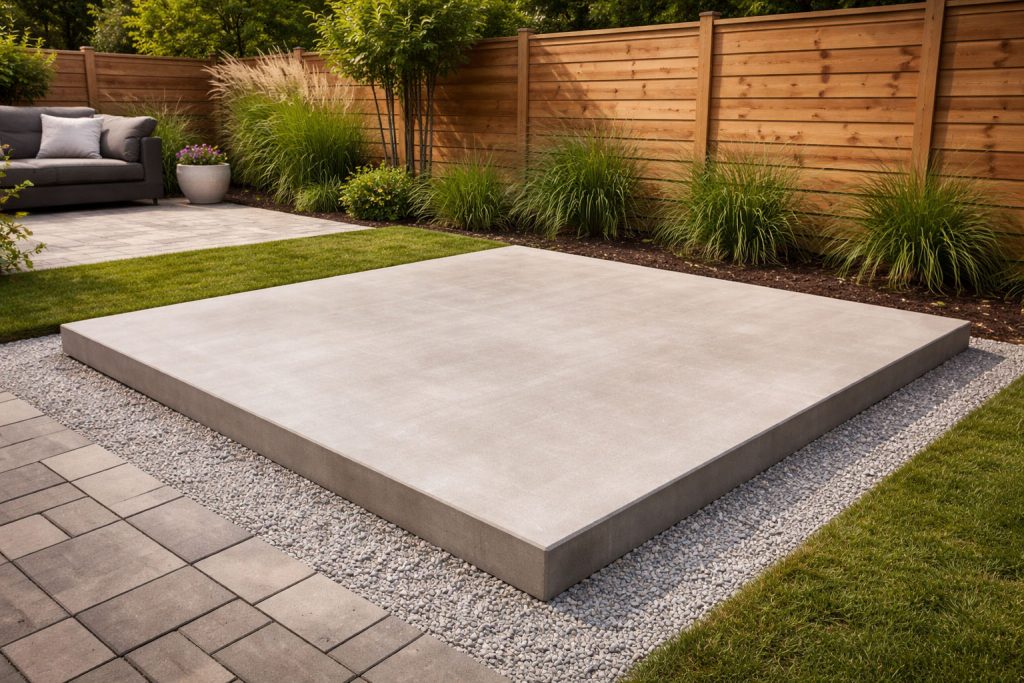
Best for: Long-term reliability and peace of mind
A properly laid concrete slab is the most stable, durable option. It won’t shift, it won’t sink, and it supports the weight evenly.
Why people choose it
-
Extremely strong and long-lasting
-
Great support across the entire hot tub
-
Minimal movement over time
Things to keep in mind
-
Needs to be level (a poor concrete job is still a poor base)
-
Takes planning and curing time
-
Usually the most expensive option
If you want the “do it once, do it right” approach, concrete is hard to beat.
2) Paving Slabs on a Proper Sub-Base (A Very Solid Alternative)
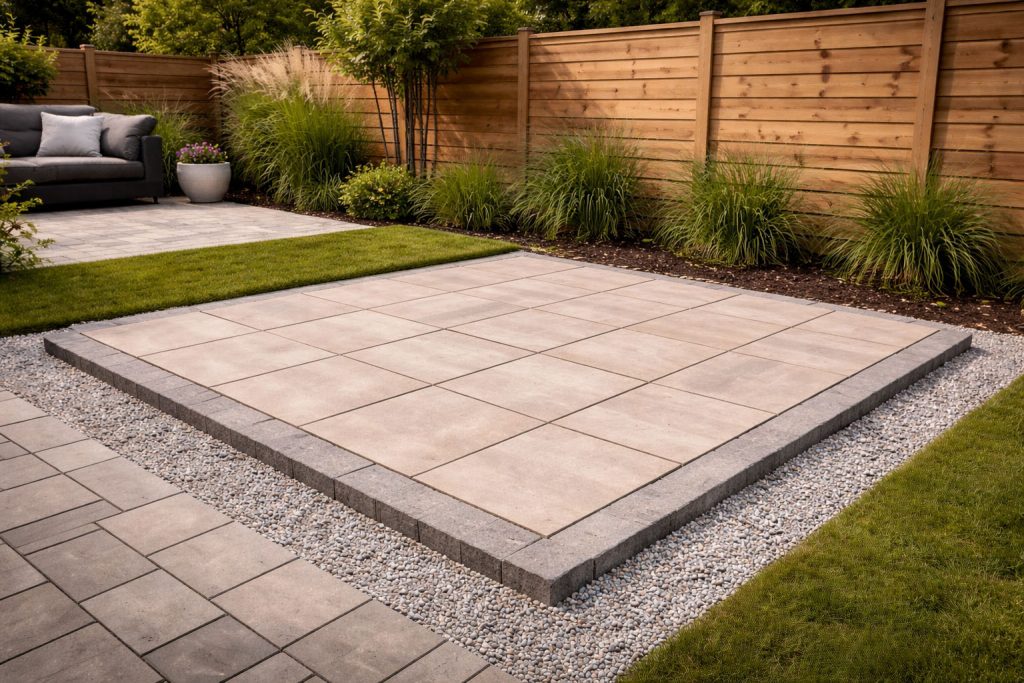
Best for: A sturdy base without pouring concrete
Paving slabs can work brilliantly, if they’re installed correctly. The key isn’t the slabs themselves; it’s what’s underneath.
What ‘installed correctly’ means
-
The ground is dug out properly
-
A firm sub-base is added and compacted
-
The slabs are bedded evenly and level
Pros
-
Strong and neat finish
-
Easier to match patios and existing gardens
-
Can be more cost-effective than concrete
Cons
-
If the ground beneath isn’t properly prepared, slabs can sink or rock over time
-
Individual slabs can shift slightly if poorly laid
Done well, slab bases are excellent. Done quickly, they’re the source of most “why is my hot tub leaning?” problems.
3) Reinforced Decking (Only If It’s Built for It)
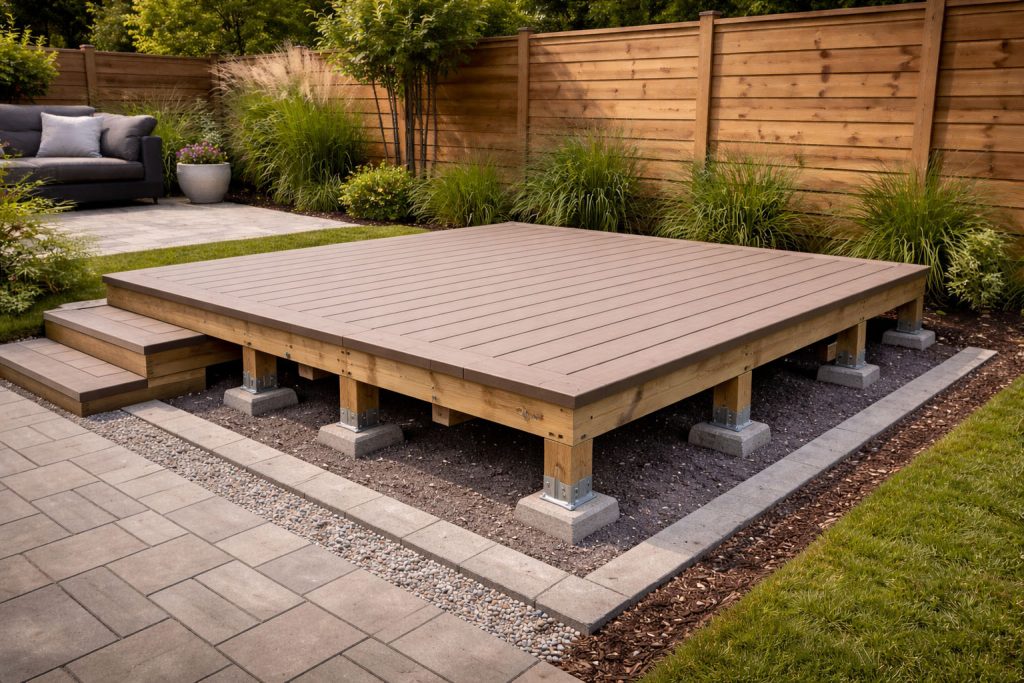
Best for: Hot tubs integrated into a raised seating/deck area
Decking can be a lovely setup, but it’s also the option most likely to be underestimated.
Standard garden decking is often built for foot traffic and furniture, not the concentrated weight of a filled hot tub.
Pros
-
Looks fantastic when designed around the hot tub
-
Great for entertaining areas
-
Can create a seamless “spa zone” vibe
Cons
-
Must be engineered specifically for the tub’s weight
-
Requires strong supports, proper joists, and correct distribution
-
Errors can be expensive to put right
If you’re planning decking, treat it as a “build it for the hot tub first, everything else second” project.
4) Purpose-Made Plastic/Composite Hot Tub Bases (Sometimes Suitable)
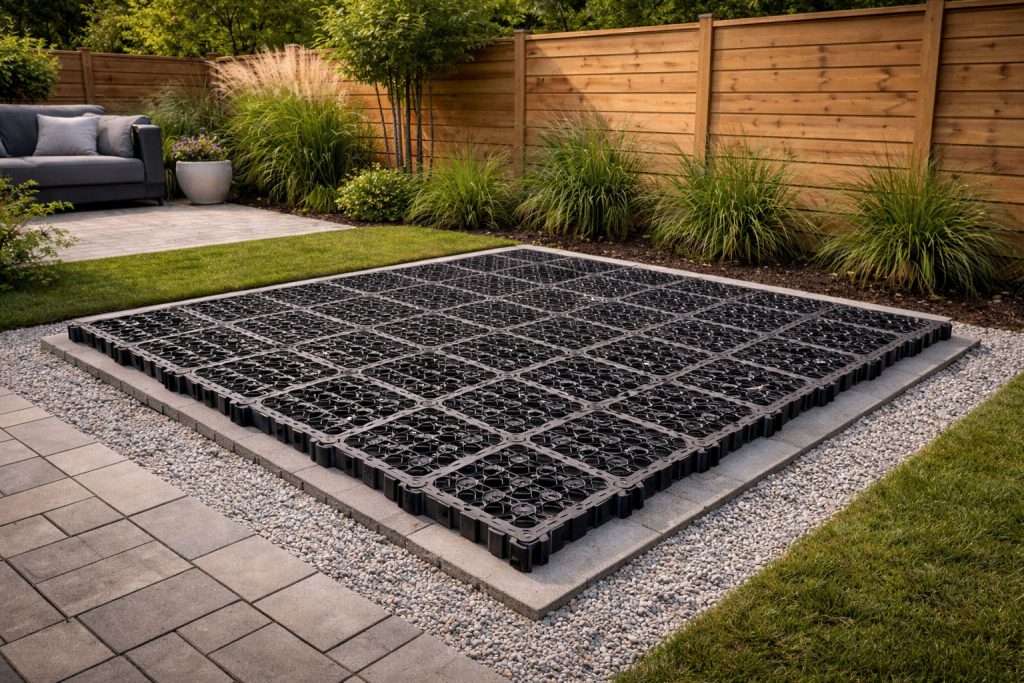
Best for: Certain situations, depending on product and ground conditions
There are base systems designed specifically for hot tubs. They can work well in some setups, but they’re not a magic fix for poor ground.
Pros
-
Quicker installation
-
Often good drainage
-
Can be neat and tidy
Cons
-
Still needs flat, well-prepared ground beneath
-
Not ideal for every garden or every tub
If you’re considering one of these, it’s worth checking suitability for your model and your garden conditions.
Common Base Mistakes (And How to Avoid Them)
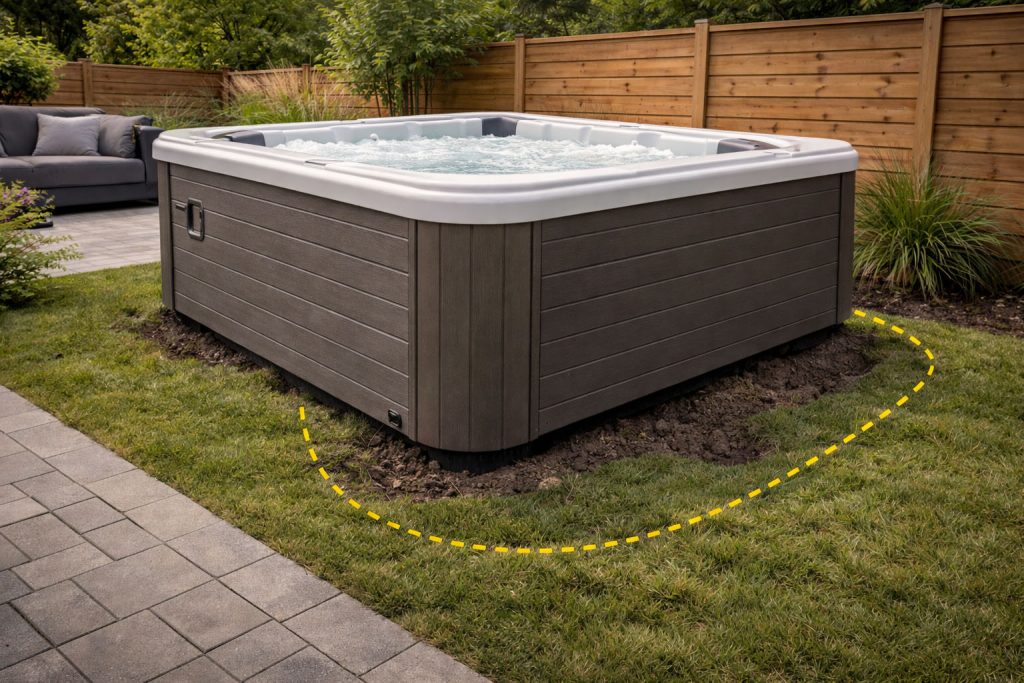
“It’s on the lawn, it’ll be fine”
Lawns compress and shift. In wet weather, the ground softens, and you’ll often get sinking at one end.
Better: Proper base. Always.
“It’s nearly level”
Nearly level becomes “obviously not level” once it’s full of water, and you’re looking at the waterline.
Better: Take levelling seriously from the start.
“We’ll just put it on the patio”
Patios might be fine — if they’re structurally sound, level, and built on a proper sub-base. Older patios or decorative paving can be uneven or not designed for heavy loads.
Better: Check condition and level, and don’t assume.
“We’ll build the base the same size as the tub”
It’s safer to allow a little extra space around the footprint, and the full base must support the entire tub.
Better: Build to the recommended spec and leave space for access.
Drainage: Not the Star of the Show, But Still Important
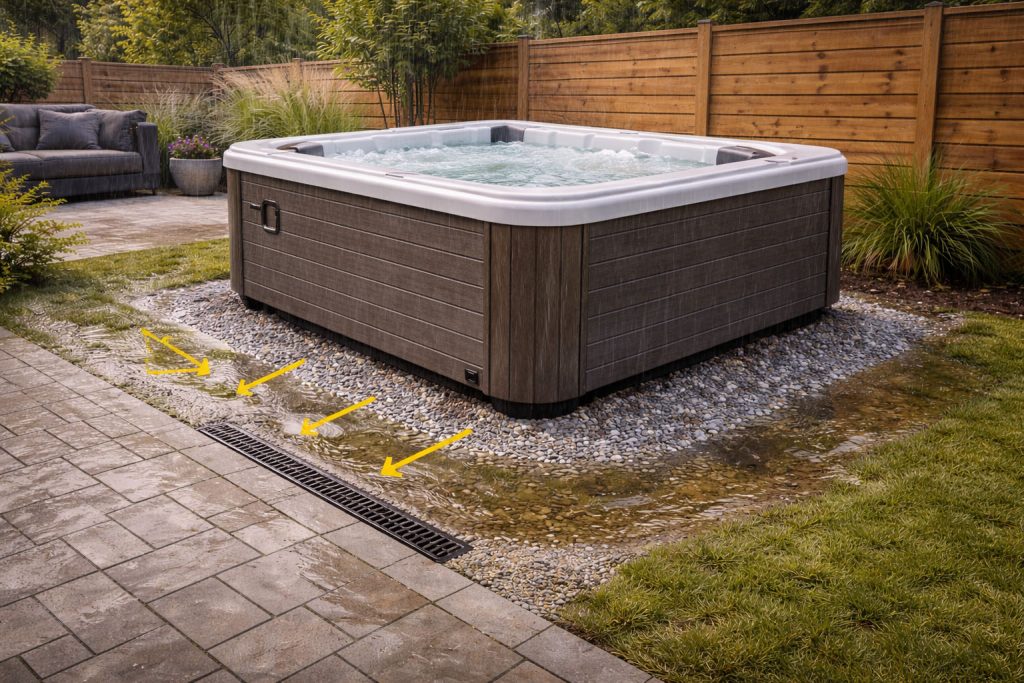
You don’t want your hot tub sitting in a puddle for months on end. While the base must be solid, the surrounding area should ideally avoid becoming a bog.
Simple ways to help:
-
Slightly improve drainage around the base (not under it in a way that undermines support)
-
Consider gravel or drainage channels around the perimeter
-
Avoid placing the tub in the lowest point of the garden if it regularly floods
Quick Checklist: Before Your Hot Tub Arrives
Use this as a simple “are we ready?” list:
-
Chosen a sensible spot with privacy and access
-
Delivery route checked (gates, side passage width, steps)
-
Base is flat, level, and built to support the full weight
-
Enough clearance for maintenance panels
-
Power supply planned (ideally confirmed with a qualified electrician)
-
Space around the tub for safe entry/exit (and cover lifting)
The Takeaway: A Great Hot Tub Deserves a Great Foundation
If you remember one thing, let it be this:
Most hot tub problems that feel “mysterious” later can start with a base that wasn’t right from day one.
A proper base protects your investment, helps your hot tub perform as it should, and keeps everything safe, level, and enjoyable for years.
And if you’re ever unsure, it’s always better to ask before installation rather than trying to fix it afterwards, base corrections are much easier before the tub is in place.